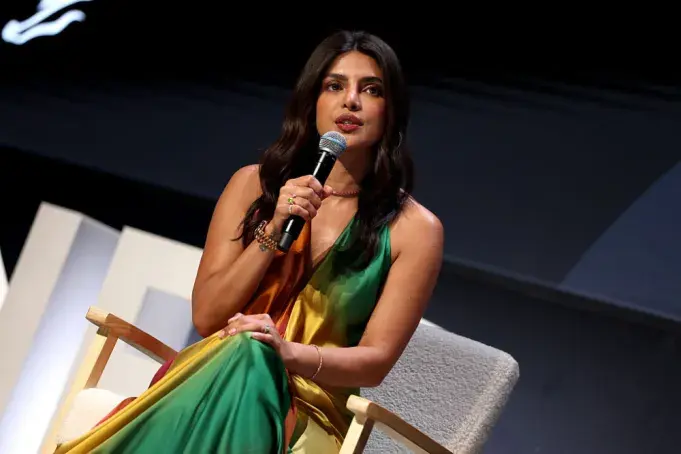
How Whitney Wolfe Herd Rewrote the Narrative and Built a Billion-Dollar Brand


There are moments in a founder’s career that look like the end of the story.
A public exit. A legal dispute. A highly scrutinized departure from a company that helped define an industry. Once a founder is associated with controversy, it often shapes how investors, partners, and the media place them going forward.
Whitney Wolfe Herd could have been permanently defined as the Tinder co-founder who was forced out amid a highly public sexual harassment and discrimination lawsuit against a fellow co-founder.
Instead, she repositioned the story, and built Bumble into a billion-dollar brand.
That repositioning was not delivered through interviews or a reputation repair campaign. It was executed through a new product narrative rooted in her own lived experience. Whitney did not distance herself from her story. She translated it into strategy and imprinted it directly into the product.
Through intentional product design, disciplined brand strategy, and long-term brand development, Bumble did not simply compete with Tinder. It reframed the category entirely. Women making the first move was not just a feature, it was strategic alignment. A structural decision that reflected the power shift she believed needed to exist, embedded into the mechanics of the platform itself.
That distinction is where the real lesson in modern brand strategy begins.
Personal Branding Is About Narrative
Personal branding at a founder level is about narrative. Plain and simple.
When Whitney Wolfe Herd exited Tinder, she faced a critical inflection point. The market had already begun defining her. Rather than defending her past, she redirected the conversation and leaned in.
Bumble launched in 2014 with a deceptively simple rule: in heterosexual matches, women message first.
That decision was more than a feature. It was brand strategy embedded from the narrative that women should have more control over their dating lives.
Users did not need to read a positioning statement to understand what Bumble stood for. The product experience itself communicated a stance. It shifted power dynamics within online dating and introduced a new tone to the category.
This is what sophisticated brand development looks like. The founder’s personal brand, the company’s positioning, and the product architecture reinforce one another.
Whitney did not attempt to out-argue her narrative. She built something that reframed it.
That is personal branding executed through strategy.
Brand Strategy Must Live Inside the Business Model
Brand strategy is often misunderstood as messaging or visual identity. In reality, strong brand positioning lives inside structural decisions.
This is why we always say branding must come first, before everything else is built.
Bumble did not rely on campaigns to declare empowerment. It designed empowerment into the user experience. That is a fundamentally different approach.
For founders building businesses today, this distinction matters. Personal branding cannot exist separately from business design. Your pricing, your offer structure, your product decisions, and your leadership behavior all signal positioning.
If narratives only appear in marketing copy, it is not brand strategy.
Whitney Wolfe Herd aligned her personal narrative with Bumble’s from day one. That alignment accelerated growth and compounded brand equity.
Brand Management Is Consistency Under Pressure
Launching with a strong position is only the beginning. Brand management is the reinforcement of that position over time.
Bumble expanded beyond dating into networking and friendship. It scaled internationally.
In 2021, it went public, becoming one of the most visible female-led tech IPOs in history.
Through growth, the core positioning held.
As companies grow, the pressure to broaden the message gets louder. Markets reward expansion. Investors want bigger reach. And if you are not careful, the clarity that made you distinct in the first place starts to blur. Without disciplined brand management, positioning slowly erodes.
This is where many founder-led businesses struggle. They prioritize visibility and veer off course. They chase marketing growth before strengthening brand foundations.
Brand management works in reverse.
Position first. Scale second.
Brand Management at Scale
Taking a company public changes the stakes. At that level, brand management becomes continuous strategic oversight. Product shifts, executive changes, and market fluctuations either reinforce the original brand strategy or weaken it. The higher the visibility, the less forgiving inconsistency becomes.
When Whitney Wolfe Herd returned to the CEO role in 2025 to lead Bumble’s next phase, it underscored a fundamental truth about founder-driven companies: personal branding and corporate brand identity are intertwined.
When a founder’s narrative is embedded into the business model, leadership continuity becomes part of brand equity.
Personal branding at scale is not optional.
The Strategic Reposition
Whitney Wolfe Herd’s story is not just about building another dating app.
It is about strategic repositioning.
She went from being defined by a very public and messy exit to defining an entirely new category. She did not do that by explaining herself over and over again. She did it by building something different and letting the product carry the point.
This is the part most founders miss: Personal branding is not what you claim in an interview. It is what consumers come to believe about you after watching what you consistently build.
Brand strategy is a structural decision.
Brand development is the work of building that structure.
And brand management is what protects the brand once growth adds noise and pressure.
Most founders try to grow first and clean up the narrative later.
Whitney did the opposite.
She clarified her purpose and narrative first. Then she scaled.
If You’re Building Something Big
If you are leading a founder-driven business, the real question is not whether you need more marketing, it’s whether you need more branding.
Does your personal brand reflect the right narrative?
Is your brand strategy embedded in your business model, or only expressed in your messaging?
Would your brand hold strong if your visibility doubled tomorrow?
Before you build, check the foundation of the house.
Our 2026 Brand Checklist walks you through the same foundational steps we take our private clients through. As you move through it, you will quickly see where your positioning is solid and where there are gaps that need attention.
And, don’t forget to let us know what you are building! We genuinely love seeing what our community is creating, and there’s nothing better than watching a clear brand turn into something real. We’ll be right here, cheering you on as you build your empire.